

In-Kind Real Estate Registration in Saudi Arabia

In-Kind Real Estate Registration in Saudi Arabia: The Complete Guide for Owners and Buyers
Most of what is written about in-kind real estate registration explains how to register with the Real Estate Registry and stops there. This guide answers a different and more useful question: what does this system actually mean for you when you sell, buy, or apply for financing?
The gap between a registered property and an unregistered one is no longer an administrative detail. It is a difference in how strongly you can prove ownership, how fast your deal closes, and whether a bank will finance it at all.
At Asas Makeen we handle real estate registration and title transfer for hundreds of units a year, across our projects available for sale and our units under construction. What follows is what we see on the ground, not a summary of the statute. Two sections near the end matter most: the pre-signing checklist and the short answers buyers ask us for.
Current phase: the Real Estate Registry is accepting first-time real estate registration applications for 167,352 parcels across the Riyadh, Qassim, Tabuk, Hail and Eastern regions, from 2 August to 5 November 2026. The Riyadh phase covers governorates including Al-Duwadimi, Afif, Al-Hariq, Al-Bijadiyah, Al-Hilwah and Nifi. Check your property before the window closes, or ask Asas Makeen to check it with you.
What is in-kind real estate registration?
In-kind real estate registration is a procedural system that treats the property unit itself as the basis for recording ownership, rights, and every subsequent transaction affecting it.
Each property inside an announced zone receives an ownership registration deed and its own page in the Real Estate Registry, carrying the property number, owner's name, type, location, area, boundaries and dimensions, plus any attached rights, restrictions, obligations and later transactions.
The registry is run by the National Real Estate Registration Services Company under the Real Estate General Authority (REGA), on a digital system built from geospatial data.
In-kind versus personal registration
This is the heart of the change, and the first thing we explain to Asas Makeen clients before any transaction.
Personal registration, the system the Real Estate Registry replaced: the deed was tied to the owner, so every search started from a person and worked toward the property. Over decades that produced overlapping deeds, imprecise ownership checks, and recurring boundary disputes.
In-kind real estate registration, the current system: the deed is tied to the property itself, and every unit receives a unique, non-repeating identity with a record tracking everything that happens to it.
A property now holds one Real Estate Registry file that knows who owned it, who owns it today, and whether it carries a mortgage, restriction or pending claim. That alone removes weeks of due diligence before a purchase.
Why Saudi Arabia moved to this system
The shift to in-kind real estate registration is not an isolated administrative measure. It is a pillar of sector reform under Vision 2030.
The old approach tied the deed to the owner, which over time produced overlapping deeds on a single parcel, difficulty verifying ownership before a purchase, and boundary disputes. The market felt this as friction: deals collapsed at the final step, banks hesitated, and international investors held back in front of an ownership environment they could not verify.
Real estate registration addresses this at the root by binding the deed to the property, giving it an identity that cannot be duplicated, and maintaining a digital record of every transaction. The expected effect is higher transparency, fewer disputes, faster closings, and broader confidence from domestic and international investors, particularly since the non-Saudi ownership framework came into force in January 2026. That works in favour of anyone who owns or plans to buy, whether that is an ownership apartment in Riyadh, a villa, or a townhouse.
What happens to your existing title deed?
A question the Asas Makeen team receives constantly: where does my current deed go?
The title registration deed issued by the Real Estate Registry becomes the official reference for your property. It is not a reissued copy of your old deed but a different document entirely, tied to the property rather than to you, setting out location, boundaries, description, permitted use, attached rights and obligations, and owner details.
Your old deed remains a historical record, but it carries no absolute conclusiveness, but every subsequent transaction runs on the new ownership registration deed and nothing else. Any bank or buyer will ask for the ownership registration deed, not the old paper.
This is why digitisation matters. If your deed has not been digitised with the Ministry of Justice, do that first so your real estate registration application can proceed.
Absolute conclusiveness: what it is and what it gives you
The single most important term in Saudi real estate registration is absolute conclusiveness, and Asas Makeen buyers hear it early.
Any interested party may object to first-time registration before the competent court, unless the registration has acquired absolute conclusiveness. Once it has, the Real Estate Registry entry becomes the final reference and the title is effectively indefeasible. A lawsuit filed before that point is annotated in the Real Estate Registry, which then records the final judgment.
Absolute conclusiveness does not arrive with the deed on day one. It is the difference between a document proving you own something and a document nobody can contest.
A property that completed real estate registration and acquired absolute conclusiveness is insulated from ownership and boundary disputes. Without absolute conclusiveness, that certainty is not there yet. The buyer stops worrying about a claimant surfacing years later. The bank prices a clean asset, because absolute conclusiveness cuts the risk attached to its security. The seller negotiates from a stronger position.
So when you verify an ownership registration deed, do not stop at confirming it exists. Check absolute conclusiveness on it. A deed holding absolute conclusiveness differs fundamentally from one still inside the objection period, and that gap is your transaction risk. At Asas Makeen we treat absolute conclusiveness as core to reviewing any unit before listing it.
That value shows in price: clean documentation sells faster and with less haggling, which is what Asas Makeen sees when comparing closing times between a complete file and one carrying an unresolved note.
Is your property in the current phase?
Real estate registration is not applied across the Kingdom at once. A decision defines a real estate zone with clear boundaries and a set application window, then announces it publicly. The law sets a 90-day window per announced zone, and zones are released in sequence until national coverage is complete. The Asas Makeen team tracks each announcement as it publishes.
How to check whether real estate registration applies to you: open the Real Estate Registry platform or app and search by property location or deed number to see whether it sits inside a currently announced zone. You can also call 199002.
A point that comes up often with the Asas Makeen team: if your property is not in the current phase, you are not outside the system, your turn simply has not come. Track the announcements and follow our media centre, where we cover regulatory updates as they land.
Late registration fines reach SAR 100,000
Real estate registration inside announced Real Estate Registry zones is mandatory, not optional.
Article 35 provides for a fine not exceeding SAR 100,000 on anyone late in submitting a real estate registration application. The amount is set by a committee reviewing violations. Applications are still accepted after the window closes, but with penalties applied.
An important route out if your paperwork is incomplete: the Real Estate Registry runs a paper submission service for owners who cannot meet requirements in time. Filing through it exempts you from the violation regardless of the application's status, provided you complete the procedures afterwards.
Asas Makeen's experience is that the most common mistake is waiting until the file is complete. If your documents are incomplete, submit anyway before the deadline.
The real estate registration steps
- Confirm your property sits inside an announced zone through the Real Estate Registry
- Prepare your documents: an ownership deed meeting statutory requirements, its number, date and issuing source, and anything evidencing real rights
- Digitise the deed with the Ministry of Justice if it is an older one
- Submit the first-time real estate registration application via the platform or app
- Track it in the Real Estate Registry and respond to any request for more information
- Receive your title registration deed. This ownership registration deed is what you work with from then on, and any sale, mortgage or subdivision runs on it
If the deed area differs from the area on the ground, the deed area is recorded after verifying it stays within the tolerated variance thresholds in the implementing regulations.
What real estate registration means for you as a buyer
This is where the value becomes concrete.
Verify the title registration deed before you sign, not after. An electronic service confirms a title registration deed and its details using the property number and issue date, showing deed status and absolute conclusiveness status.
That check takes minutes and tells you:
- Is the ownership registration deed actually issued in the seller's name?
- Does the property carry a mortgage, restriction or obligation?
- Is a lawsuit annotated in the Real Estate Registry?
- Has it acquired absolute conclusiveness yet?
The question Asas Makeen advisors tell buyers to ask directly: has the property completed real estate registration? If not, is it inside an announced zone and still unregistered? The answer changes your timeline and your budget.
Planning bank financing? Run the numbers with our mortgage calculator before comparing units, whether you are looking at apartments for sale in Riyadh or northern Riyadh specifically.
What it means for you as a seller
A property that skipped real estate registration while sitting inside an announced zone is a deferred transaction. Asas Makeen advises sellers to close this gap first.
Informed buyers check the Real Estate Registry before negotiating and ask directly about real estate registration status and absolute conclusiveness. Your property missing from the Real Estate Registry while inside an announced zone raises an immediate question about your file and hands the buyer leverage on price.
All subsequent transactions on registered properties run through the Real Estate Registry platform, so a deal on a registered property moves along a clear digital path.
Advice from the Asas Makeen team: do not wait until you find a buyer to start the registration process. Register first, then list.
What it means for you as an investor
If you treat property as an investable asset rather than a home, the effect of real estate registration is even clearer. Asas Makeen sees this most in institutional conversations.
Sharper risk pricing. An asset whose ownership and restrictions can be verified in minutes carries lower legal risk, and that flows into valuation and financing terms.
Faster exit. What worries an investor is the sale, not the purchase. A property holding a title registration deed with absolute conclusiveness sells faster, because the next buyer will not spend weeks on paperwork.
Better market data. A unified Real Estate Registry builds an accurate dataset per unit, improving the indicators behind your decisions.
An implicit condition in institutional finance. Lenders and funds increasingly prefer assets holding an ownership registration deed with clean documentation. An asset left outside real estate registration inside an announced zone can fall outside their scope entirely.
Put registration status among your selection criteria, not after them. We apply this test to Asas Makeen assets before acquiring them. For more, see our guides on real estate investment in Riyadh and choosing a real estate investment company.
Off-plan units: who is responsible?
A question that comes up constantly: who handles real estate registration for a unit bought off-plan?
The Real Estate Registry lets developers register off-plan sale licences and issue project certificates, with a dedicated window for enterprises, banks and developers to manage their portfolios.
In practice: buying from a licensed developer puts licensing, subdivision and project real estate registration inside the developer's responsibility rather than landing on you after handover. That is a fundamental difference from buying from an individual owner, particularly with off-plan apartments. At Asas Makeen we set out the licensing and subdivision status of each project before any commitment, and our approach is detailed in our guide to real estate development.
Before signing with any developer, including Asas Makeen, ask for: the licence number, the project's registration status, and a written statement of who carries the registration and subdivision procedures.
Services after registration: subdivision, consolidation, transfer
Real estate registration is not the end of the process but the beginning, and the Real Estate Registry stays with the property for life. Once in-kind real estate registration is complete, every subsequent transaction runs through the Real Estate Registry:
- Ownership transfer on sale, gift or inheritance
- Subdivision in the Real Estate Registry into independent units, each with its own record and title registration deed
- Consolidation of multiple properties into one
- Management of rights, restrictions and obligations such as mortgages and easements
- Dedicated property records for registered properties
Subdivision matters most to apartment buyers, and it is among the most frequent questions reaching Asas Makeen sales. A unit inside a building needs subdivision to become an independent, tradable and mortgageable title with its own ownership registration deed. Buying from a licensed developer puts that step inside the project workflow.
How it connects to title transfer and the transaction tax
Real estate registration, title transfer and the transaction tax form one journey, and it helps to see them linked:
In-kind real estate registration establishes who owns the property and what attaches to it, and issues your ownership registration deed.
Real estate transaction tax is due at 5% on transfer, and nothing is documented before it is paid or an exemption evidenced. Full detail in our guide to the real estate transaction tax.
Title transfer is the conveyance itself and its entry in the Real Estate Registry.
Each link depends on the one before it, and the Asas Makeen team works all three in parallel for every unit. Unclear ownership stalls the two steps that follow. That is what makes real estate registration an investment in the speed of your next transaction rather than a compliance chore.
Checklist before you sign
This is the list the Asas Makeen team works through internally. Save it and use it before any signature.
- Verify the title registration deed via the electronic service using property number and issue date, and confirm it matches the property data
- Check absolute conclusiveness on the deed. Without absolute conclusiveness the file is still open
- Ask about restrictions, mortgages or obligations recorded on the ownership registration deed
- Confirm no lawsuit is annotated in the Real Estate Registry
- Match area and boundaries on the title registration deed against the ground and the map
- If the seller is a developer, verify the licence and the project's real estate registration status
- Budget the real estate transaction tax before you negotiate
- Do not sign until it is clear who carries the Real Estate Registry procedures and their cost
Frequently asked questions
What is in-kind real estate registration?
A system treating the property unit as the basis for recording ownership. Each property gets an ownership registration deed and a page in the Real Estate Registry showing its data, rights and restrictions.
Is real estate registration mandatory?
Yes, for owners inside announced Real Estate Registry zones, within the window set in the announcement. It ends with a title registration deed carrying absolute conclusiveness once the objection period passes.
How much is the fine for late real estate registration?
Up to SAR 100,000 under Article 35, set by a designated committee. Applications are still accepted after the deadline, but the penalty applies.
How do I know if my property is included?
Through the Real Estate Registry platform or app, searching by property location or deed number, or by calling 199002.
How long is the registration window?
90 days for each real estate zone from the date it is announced. The current phase runs from 2 August to 5 November 2026.
What if my documents are incomplete before the deadline?
Use the paper submission service. Filing exempts you from the violation regardless of status, provided you complete the procedures afterwards.
What is the difference between an electronic deed and a title registration deed?
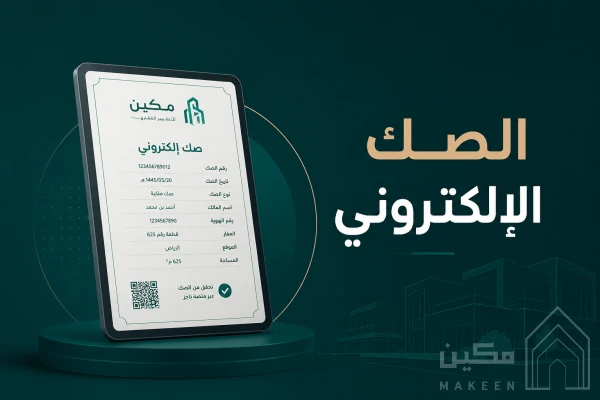
An electronic deed is a digital copy of the old deed, tied to the owner. An ownership registration deed is issued by the Real Estate Registry, tied to the property itself, and acquires absolute conclusiveness under the law.
Can I object to first-time registration?
Yes, before the competent court, unless the real estate registration has acquired absolute conclusiveness. After absolute conclusiveness the objection route closes. The lawsuit is annotated in the Real Estate Registry.
Does registration cover apartments and residential units?
Yes. Real estate registration uses the property unit as its basis, covering land and subdivided units inside buildings, each with its own title registration deed.
Do I need to update my old deed first?
The deed must meet statutory requirements and be digitised. Begin digitisation with the Ministry of Justice before submitting your real estate registration application.
Buy from a source that does not leave you chasing paperwork
The clearest conclusion is that where you buy determines how much procedural weight you carry. With a licensed and qualified developer such as Asas Makeen, licensing, project real estate registration and subdivision sit inside an existing operating system rather than becoming a task you discover after handover.
Asas Makeen is a real estate development and investment company holding a developer qualification certificate from the Real Estate General Authority, listed on the Nomu parallel market. See our about and investor relations pages.
Asas Makeen units sit across northern and eastern Riyadh, including Al-Arid district properties, alongside units for rent if you want to try a district before buying.
Browse Asas Makeen projects available for sale
Talk to the Asas Makeen team to check the real estate registration and subdivision status of any unit before you commit. For quick questions, see our FAQ page.
Disclaimer: This content is for general awareness, based on the in-kind real estate registration law, its implementing regulations and published announcements. Windows and zones change through periodic announcements and details vary case by case. Consult the Real Estate Registry or the Real Estate General Authority, or a qualified adviser, before acting.