

Transferring property ownership via the electronic title deed
The moment you pay the final instalment is not the end of thetransaction. The transaction ends when an electronic title deed is issued in your name and recorded in the official registry.
Between those two moments sit defined procedures, non-negotiable documents, and conditions that halt everything if one of them fails. This guide covers what the electronic deed is, how to verify and update it, and how ownership transfer works step by step.
What is an electronic title deed?
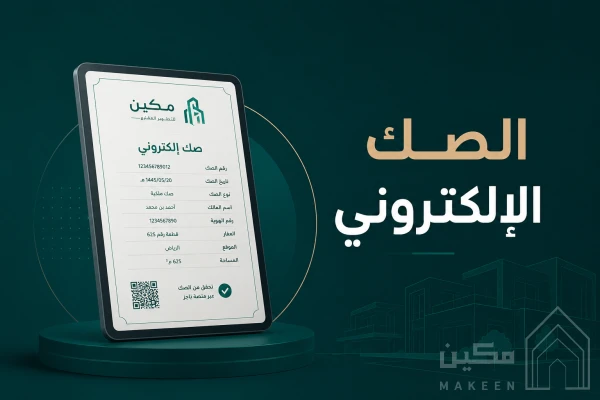
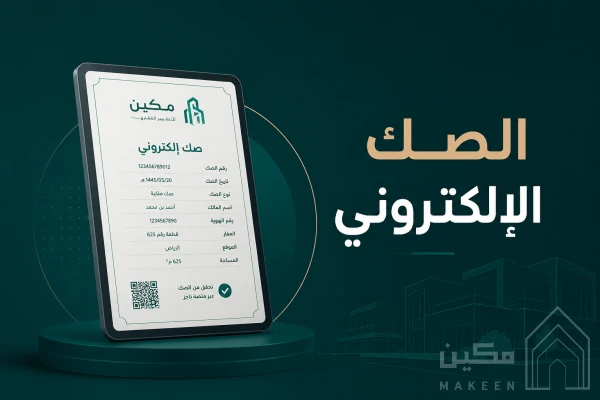
An electronic title deed is a property ownership document issued and recorded digitally within the Ministry of Justice system, replacing the traditional paper deed. It carries the property details, the owner, the area and the boundaries, and is tied to a unique reference that can be verified digitally at any time.
The reasoning behind the shift is straightforward: reduce paperwork, increase transparency, and speed up procedures. The practical result is that a property transaction no longer requires repeated in-person visits to notary offices.
Electronic versus paper deeds
| Criterion | Paper deed | Electronic deed |
|---|---|---|
| Format | Document issued by a notary | Digital record with a verification reference |
| Verification | Requires visiting the authority | Instant via official platforms |
| Loss or damage risk | High | None |
| Forgery risk | Theoretically possible | Extremely difficult |
| Electronic conveyance | Not possible | Possible |
| Updating details | Paper procedure | Electronic via Najiz |
The decisive line is the second-to-last one: electronic conveyance cannot be completed with an old paper deed. A condition of the service is that the deed be registered electronically in the Ministry of Justice system.
So if you own a property with a paper deed and intend to sell, updating the deed is your first step, not your last.
How to verify an electronic title deed
Before signing anything or paying a deposit, verify the deed. It takes minutes and saves months.
The steps:
- Log in through the National Single Sign-On (Absher) to the Najiz portal.
- Select the verification services or electronic services section.
- Enter the deed number to check its status.
What you are specifically looking for:
- Validity and update status within the electronic deeds system.
- Owner details matching the seller you are dealing with.
- Property description matching: city, district, plot number, plan number and area.
- Absence of encumbrances: no mortgages and no judicial restrictions preventing transfer.
Practical warning: do not pay a deposit before checking the deed. A deposit paid on a mortgaged or judicially restricted property turns into a long dispute quickly.
When does a deed need updating?
Updating is an electronic procedure through Najiz, but it assumes your underlying data is sound.
You will need an update if:
- You hold an old paper deed never registered electronically.
- Owner details or ID number have changed.
- The property description in the deed differs from reality.
- You intend to sell, mortgage or transfer electronically.
Core requirements for updating:
- Property data — city, district, plot number and plan number — must be correct and match the deed, or match a letter issued by the competent authority such as the regional municipality, with a copy attached.
- The plot numbers stated in the deed must fall within plans approved by the competent municipal authority.
If a data conflict appears, the correct route is to approach the competent authority — the municipality or the amanah — to obtain documentation of the correct position, then return to complete the update.
Printing the electronic deed
Once issued or updated, you can obtain a printed copy or digital file through Najiz using your National Single Sign-On account. The printed copy is useful for banking and administrative dealings, but the legal reference remains the electronic record, not the paper.
What is property conveyance?
Property conveyance is the formal procedure by which ownership passes from the current owner to a new owner, with the transfer recorded in the official real estate registry.
The terms "electronic conveyance" and "electronic property conveyance" are used interchangeably; the latter is the full official name of the service on the Najiz platform.
The Ministry of Justice has made available an automated electronic pathway allowing seller and buyer to complete conveyance around the clock and agree transaction details automatically, without needing approval from a notary or authenticator.
Types of conveyance
- Sale conveyance — transfer against payment.
- Gift conveyance — transfer without consideration, usually between relatives.
- Inheritance conveyance — from a deceased owner to heirs, or among heirs.
- Partial conveyance — transfer of part of a property where the deed permits subdivision.
Requirements for electronic conveyance
Before starting, confirm these are in place:
| Requirement | Detail |
|---|---|
| Electronic deed | Updated in the electronic deeds system and valid |
| Tax settlement | Real estate transaction invoice issued and amount paid |
| Bank accounts | Active accounts for both parties |
| Absher account | Activated for both parties |
| No encumbrances | No mortgages and no judicial restrictions |
| Data consistency | Plot numbers within approved plans |
Geographic exceptions
Direct electronic conveyance through Najiz does not apply to properties located in Makkah and Madinah. In those cases the parties must go to notary offices or accredited authenticators.
Mortgaged property
Conveyance cannot be completed until the mortgage is released electronically by the financing entity, at which point the deed status updates automatically in the system.
This point confuses many buyers. A mortgaged property is not barred from sale, but the sequence with the financing entity must be clear and documented before any money moves.
The ownership transfer steps
Here is the full path in order.
Step 1 — Pre-verification. Check the deed: electronic, updated, valid, consistent and unencumbered. Verify the seller's identity against the owner named in the deed.
Step 2 — Document the agreement. Write the sale contract clearly: price, payment method, conveyance date, who bears the tax if the parties agree to depart from the default, and each party's obligations on delay.
Step 3 — Issue the real estate transaction invoice. The transaction is registered and the amount settled before conveyance or authentication is completed under the electronic pathway. If you qualify for first-home support, obtain the eligibility certificate before registering the transaction.
Step 4 — Submit the conveyance request. The seller logs into Najiz, selects the mortgages and real estate service, then the property ownership transfer service, and enters the deed details, party details and transaction terms.
Step 5 — Buyer approval. The request reaches the buyer for review and approval. An important warning here: once the buyer approves, the seller cannot cancel the request. Review every field before clicking approve.
Step 6 — New deed issued. An electronic deed is issued in the buyer's name and the registry is updated. You can track request status in real time through Najiz using the referral or deed number.
Step 7 — After conveyance. Transfer the electricity and water meters, update the unit's details with the owners association if the property is common property, and keep both a digital and a printed copy of the new deed.
Fees and the real estate transaction tax
Service fees
Direct electronic conveyance through the Najiz portal is free of charge. Completing the procedure through an accredited authenticator carries its own fees.
The transaction tax
The tax is 5% of the property value, payable to the Zakat, Tax and Customs Authority before or at the point the transaction is authenticated.
The burden falls on the seller by default, unless agreed otherwise with the buyer, in which case it must be stated explicitly in the sale contract. Verbal agreements to split the tax are a recurring source of later disputes.
A real estate transaction, under the law, is any disposal transferring ownership, possession or usufruct of a property, whether covering all or part of it, and whether the property is land, a residential unit or a building.
First-home support
The state bears the real estate transaction tax on up to SAR 1 million of the purchase price of a Saudi citizen's first home.
| Property price | Tax payable by an eligible citizen |
|---|---|
| SAR 1 million or less | Zero |
| SAR 1.5 million | SAR 25,000 (on the excess SAR 500,000 only) |
| SAR 2 million | SAR 50,000 (on the excess SAR 1 million only) |
An important correction: a property priced under SAR 1 million is not automatically exempt. The million-riyal threshold relates to the state bearing the first-home tax for an eligible citizen under defined conditions. It is not a blanket exemption for all properties.
The official route must be followed and the eligibility certificate obtained before the transaction is registered. If you paid the tax before obtaining the certificate despite qualifying, there is a route to reimbursement through the competent authority after proving eligibility.
Other exempt cases
The law and its regulations include specific exemption cases that cannot be generalised without examining each set of conditions. These touch on gifts within defined degrees of kinship, distribution of estates among lawful heirs, transfers to government or public-benefit entities, and certain cases of contributing property as an in-kind share in a company's capital under defined controls.
Transferring ownership as security for financing — a mortgage — is not treated as a taxable transaction, provided ownership returns to the original owner once the financing ends.
One final point worth noting: if the contract price is materially below market value, the Authority may revalue the property and claim the tax difference along with penalties. Understating the price in the contract is not a clever manoeuvre; it is a regulatory risk.
In-kind real estate registration: how it relates
Many people conflate the electronic deed with in-kind registration, although the difference is substantial.
The electronic deed converts the document itself from paper into a digital record. Ownership is proved by the deed, and the deed is tied to its owner.
In-kind real estate registration goes deeper: the register centres on the property rather than the document. Each registered property has its own record carrying a unified property number, in which every disposal and right attaching to it is recorded over time — sale, mortgage, easement, partition.
The practical difference is that the property number accompanies the property for its lifetime and becomes a single reference across all authorities, replacing multiple descriptions and labels.
In-kind registration is applied in phases, with in-kind registration areas announced progressively. What this means for you as a buyer:
- Check whether the property falls within an area where in-kind registration has been announced.
- If it does, some procedures and timelines may differ from the standard route.
- In every case, the accuracy of the deed data and its correspondence to reality remains the first condition.
The direction of travel is clear: the Saudi property market is moving toward a unified digital register that reduces disputes and raises transparency. Every check a buyer performs today on deed data pays off later at registration.
Documents required for transfer
Gather these before you start to save time.
From the seller:
- The updated, valid electronic title deed
- A valid national ID or residence permit
- An activated Absher account and an active bank account
- Evidence of mortgage release if the property was mortgaged
- A letter from the competent authority if there is any conflict in property data
From the buyer:
- A valid national ID
- An activated Absher account and an active bank account
- A first-home eligibility certificate if applicable
- A financing letter from the lender if purchasing with a mortgage
Joint documents:
- The sale contract stating price, payment terms and who bears the tax
- The real estate transaction invoice once issued
- For common property: owners association details and fee schedule
How long does it take?
There is no fixed figure, because the timeline depends on your readiness rather than the platform. Cases that typically stall are:
- A paper deed requiring an update first
- A conflict in plan or plot data requiring a municipality review
- An outstanding mortgage awaiting release by the lender
- A property in Makkah or Madinah requiring a non-electronic route
- A delayed first-home certificate
The rule: every condition you prepare in advance removes days from the process.
The deed and mortgage financing
If you are buying with financing, the deed is not a document produced at the end. It is a live requirement from the start.
Before approval, the lender requests deed data to verify ownership, match the description, and confirm the property is unencumbered. Any defect here stops the application before it begins.
At valuation, the valuer relies on the deed's description: area, boundaries, plan number. A discrepancy between actual and recorded area complicates valuation and delays approval.
At conveyance, the mortgage is registered in favour of the lender within the same record. Transferring ownership as financing security is not a taxable transaction, provided ownership returns to the original owner once financing ends.
On full repayment, the mortgage must be released electronically so the deed status updates. Many owners finish their financing and never follow up on the release, then discover years later at the point of sale that the restriction is still recorded. Follow up immediately after the final payment.
One last note: if you are buying with subsidised financing, sequence the first-home certificate, the transaction invoice and the conveyance date correctly. The wrong order does not void your entitlement, but it adds corrective steps you could have avoided. Our guide on mortgage and housing support covers the distinction in detail.
Electronic deeds in off-plan projects
When you buy a unit under construction, there is no partitioned deed in your name from day one. The path differs slightly:
- Licensing — the project must be licensed for off-plan sale, with instalments deposited into the designated account under the applicable rules.
- Partitioning — once construction completes, units are partitioned and separate deeds issued.
- Conveyance — your unit's ownership transfers to you through the standard electronic route.
This is why choosing a licensed developer with a delivery record matters more than a small price difference. Always ask for proof of licensing, and confirm the payment schedule is tied to construction milestones rather than dates alone. Our guide to buying off-plan explains the mechanism in more depth.
Common mistakes that stall transfers
Paying a deposit before checking the deed. The costliest error by a distance. Minutes of checking beat months of litigation.
Assuming a paper deed is sufficient. Electronic conveyance will not proceed. Update first.
Overlooking a mortgage. Verification reveals it, but arranging release with the lender needs a written agreement on timing.
Not naming who bears the tax in the contract. The default is the seller, and any departure must be written.
Approving the conveyance request without reading it. Once the buyer approves, the seller cannot cancel. Read every field.
Not obtaining the first-home certificate before registering the transaction. Sequence matters, and correcting it later means extra steps.
Neglecting post-conveyance tasks. Meters and association records are routinely forgotten, and the problems surface months afterwards.
What if a problem appears after conveyance?
Conveyance closes the question of ownership. It does not close everything else.
Hidden defects in the unit. Conveyance does not waive your rights regarding construction quality or contractual warranties. Review the warranty clauses in your contract, and document any defect with photographs and dates as soon as you find it.
Actual area differing from recorded area. If a material discrepancy appears, the route starts with the competent technical authority to correct the description, then updating the deed. Do not ignore it; it will resurface at resale.
Outstanding obligations from the previous owner. Utility bills or unpaid association fees. This is exactly what should be verified before conveyance, and stated in the contract as a seller's declaration that the unit is free of dues.
An error in the new deed's data. If a spelling error appears in the name or ID number, correction requests are submitted electronically. Review the deed the moment it is issued rather than waiting until you need it.
The rule that summarises all of this: what you verify before paying costs you minutes; what you discover after conveyance costs you months.
Frequently asked questions
How do I know whether a deed is electronic? Query it on the Najiz portal after logging in through the National Single Sign-On. If the deed appears in the electronic deeds system with a valid status, it is electronic and updated.
Is electronic conveyance free? Direct electronic conveyance through Najiz carries no fees. Conveyance through an accredited authenticator has its own charges.
Can land be conveyed electronically? Yes, provided the deed data matches reality and no regulatory obstacles exist.
Can a mortgaged property be transferred? Conveyance only proceeds after the mortgage is released electronically by the financing entity, at which point the deed status updates automatically.
Who pays the real estate transaction tax? The seller by default, unless the parties agree otherwise and state it explicitly in the sale contract.
Is a property under SAR 1 million exempt from the tax? No, this is not a blanket exemption. The million-riyal threshold concerns the state bearing the first-home tax for an eligible citizen under defined conditions.
What is the difference between an electronic deed and in-kind registration? The electronic deed converts the document into a digital record tied to the owner. In-kind registration creates a record for the property itself under a unified property number, recording every disposal and right attaching to it.
Can conveyance be done electronically in Makkah and Madinah? Direct electronic conveyance through Najiz does not apply there; notary offices or accredited authenticators are required.
Can a conveyance request be cancelled? Once the buyer approves, the seller cannot cancel it. Review the details before approving.
Before you buy
Ownership transfer is not an administrative afterthought. It is the step that converts payment into ownership. Start by checking the deed, settle the tax question in writing, confirm the property is free of encumbrances, and only then pay.
If you are buying from a developer, ask about deed status, the partitioning mechanism and the conveyance process before you reserve. An organised developer answers those questions with documents rather than assurances.
Explore Asas Makeen residential projects and current apartments for sale in Riyadh, and read how real estate development works for the wider picture.
For any question about ownership and conveyance procedures in our projects, contact our team.
This article is for general awareness and does not constitute legal advice. Procedures and fees may change. Please refer to the official sources — the Najiz portal, the General Real Estate Authority, and the Zakat, Tax and Customs Authority — before taking any action.
News Gallery